
Every part on this floor is verified by someone other than the person who made it. That rule costs minutes. Skipping it costs the batch. No schedule pressure has ever been enough to bend it.

A work order does not reach the floor until four things are confirmed: material is available, tooling is ready, machine capacity is reserved, and the inspection plan is attached. If any one of the four is missing, the order stays in the queue. This is why a committed lead time holds from first cut to final pack, even when the plant is busy.
Experience on one machine does not qualify an operator for another, and the certification matrix enforces that separation. A supervisor cannot assign work outside the matrix, no matter how busy the floor is.
Every operator is logged against every station, showing who is qualified, who is training, and who is due for recertification.
A certified automotive operator does not automatically qualify for aerospace work, and the matrix keeps those stations locked.
Refresher assessments are booked in advance, not discovered when a certificate lapses on the floor.
Work in progress moves between shifts on paper, not on assumption, and the incoming lead signs off before taking control.

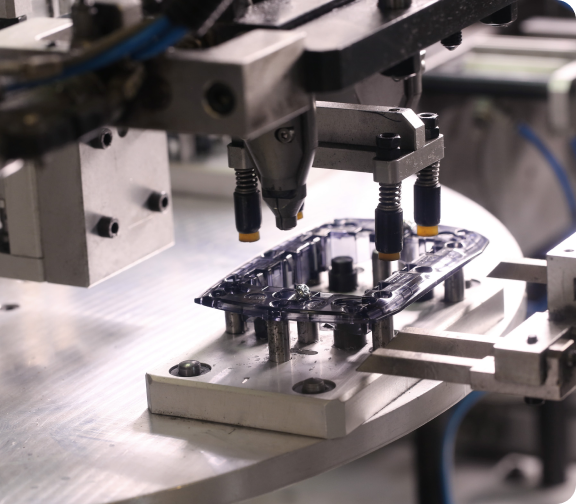
Every changeover follows a documented checklist. Tools and mold inserts are replaced at defined life, tracked per part number, never at visible wear. Production is monitored at intervals set in the work order, out-of-tolerance readings escalated immediately.

At Crest Auto Parts, a part that fails inspection is not quietly reworked and returned to the batch. Rework requires written authorization from the quality department. That authorization defines what is acceptable and what is not. A part reworked outside that scope is scrapped, regardless of how minor the correction appeared.
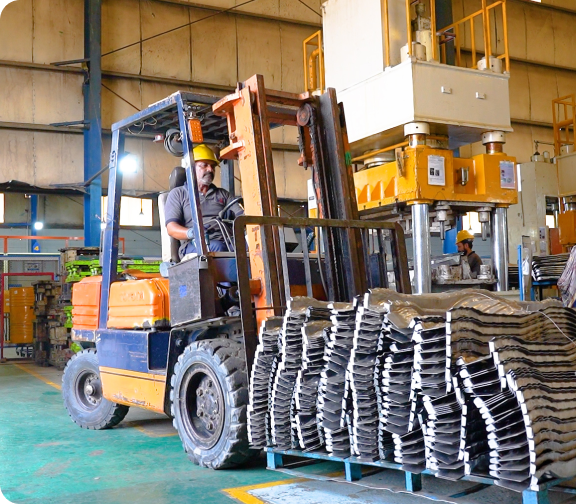
When a machine stops, the floor does not wait for the shift to end before reacting. The operator raises the stoppage immediately. Maintenance is called. The production planner is informed so the schedule can be adjusted if the downtime will extend. Every stoppage over a defined threshold is logged with the cause and the action taken.
This discipline is why buyers searching for an auto parts manufacturer and supplier in Pakistan shortlist Crest Auto Parts.




The floor runs on a rhythm. Daily meetings cover the previous shift’s output, today’s priorities, and open issues. Weekly meetings review delivery performance against plan. Monthly meetings review trend data and process improvements. Every meeting produces assigned actions with due dates and named owners.
As an auto parts manufacturing company in Pakistan, we train operators through in-house apprenticeships, promote supervisors from the floor, and keep the quality function independent of production pressure.
Ask for the records on your next order. Every practice we follow produces a document: certification matrix entries, handover sheets, changeover checklists, tool life logs, rework authorizations, and meeting minutes with named actions. When you request a Crest Auto Parts’ facility visit, the engineering team walks you through any of them against a live work order.
They are built into the process, not added as a surcharge. Setup verification, tool life tracking, and monitoring frequency are part of how the work order runs, not extra services. A part produced under these practices costs the same as one produced without them at Crest, because there is only one way work is done here.
Yes. Buyers can request additional inspection gates, tighter monitoring intervals, or specific test requirements on top of the standard plan. These are added to the work order at quotation so the cost and lead time impact are visible before production begins. No requirement is added mid-batch without written approval.
The problem is caught before it reaches you. A setup verification or in-process check that finds a fault stops the batch and triggers rework or scrap at Crest’s cost, not yours. If the correction affects your delivery date, the production planner informs you before the original date passes, not after.
Yes. Buyers preparing a vendor qualification file can request a walkthrough covering the certification matrix, handover records, changeover checklists, and the non-conformance log. The engineering team walks through a live work order so you see the practices in use, not just described.
The practices are the same. The criteria differ. Aerospace and energy work carry additional certification requirements, tighter monitoring intervals, and extended traceability records. Automotive work follows the same rules with standard documentation. One set of operating principles, applied differently based on what the part has to survive.